What Wedding Photography Really Costs in Montreal
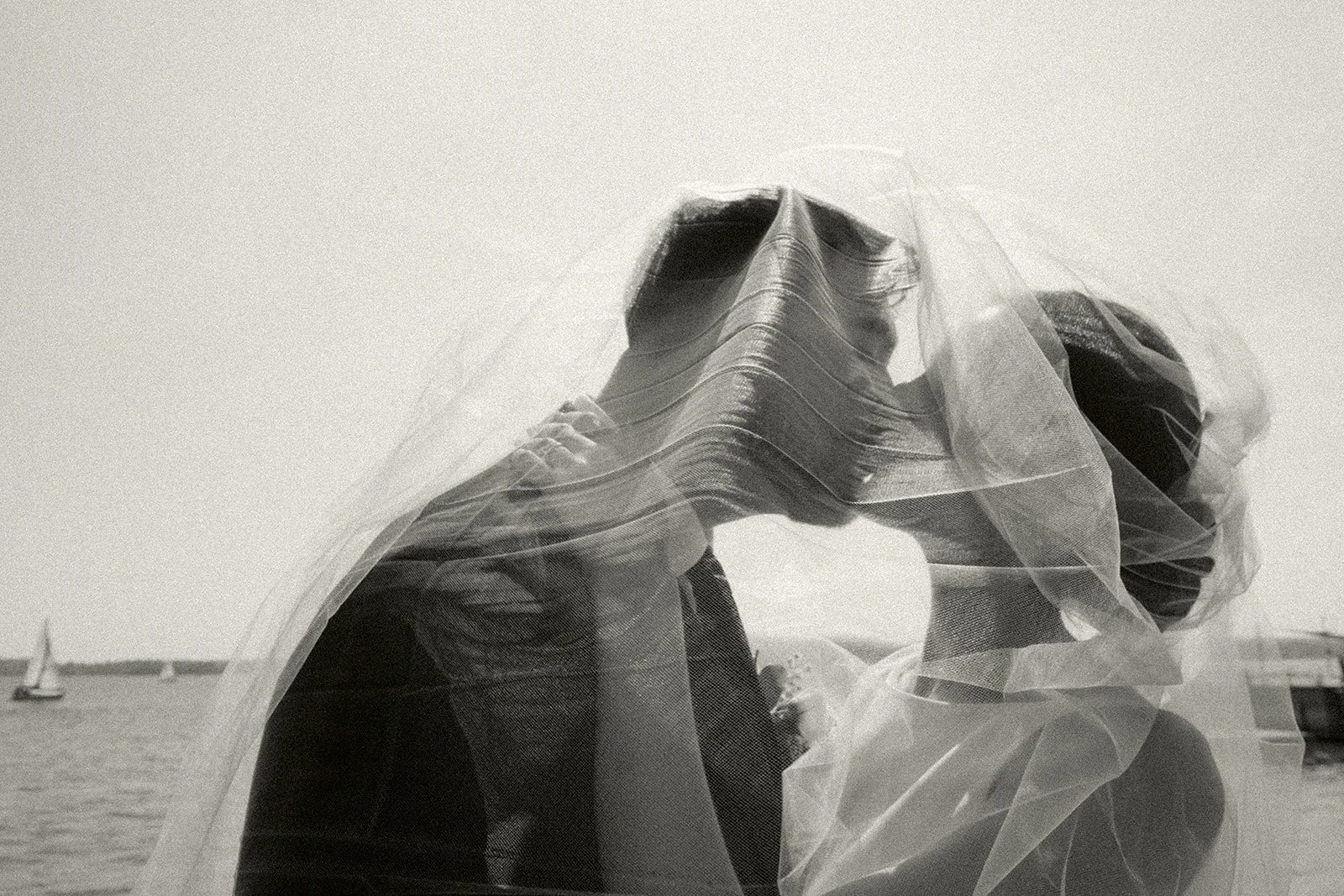
There’s a moment in wedding planning where everything starts to become more real.
You’ve chosen a date, locked in a venue, and then you start reaching out to vendors: florists, planners, and photographers. And the price ranges can feel wide. Confusing, sometimes.
This isn’t a breakdown meant to convince you of anything. But I am hoping to give you a clearer sense of what you’re stepping into, so that you can make decisions that feel aligned with your vision and priorities.
The Short Answer
In Montreal, most wedding photography falls somewhere between $3000 and $10000+, depending on the level of experience, approach, and what’s included.
That range can feel large but there are real reasons behind it.
Why Pricing Varies So Much
Photography is not a fixed product. You’re not just paying for hours and a number of photographs. In fact, using these as your base metrics can overlook some more important factors of your overall enjoyment and experience of your wedding day.
You are also choosing:
how your day is observed
how moments are anticipated
how comfortable you are
how your memories hold over time
Two photographers can spend the same number of hours at a wedding and create completely different experiences and have completely different results.
It may seem more desirable to get more photographs back, but it takes a lot less work to deliver a less considered gallery. Having to go through 1000+ photographs (of often very similar photographs) of your wedding day places the curation onus on you. Some people want this! That’s ok!
A lower amount of photographs suggests curation, consideration, quality and story. It takes time to see a gallery come together, like the movies, we don’t see ALL the footage, we see the story shaped in the editing room. The story that is evocative, questioning, emotional, considered and memorable. All the hidden gems get their deserved spotlight.
What You’re Actually Investing In
There are visible parts:
coverage time
edited images
galleries, albums
But what often matters more is less tangible.
Things like:
presence (how someone moves throughout the day with little interruption)
intuition (knowing when to step in and when to step back)
consistency (being able to deliver across any light, timeline, or environment)
And beyond the day itself, there is:
the time spent editing with care (a wedding edit at my end takes somewhere between 25-40 hours - I budget a week of work per wedding)
maintaining equipment and data backups (I pay for infinite hosting, store all photographs on external drives, invest in 3rd party cloud backup that updates daily etc.)
film costs, processing and development (I personally send mine to All Things Film, a lab based in London, Ontario)
the unseen structure that supports a professional, reliable experience (bookkeeping, accounting, admin, mentoring, etc.)
A Note on Hourly Rates
It can be tempting to compare photographers based on hours & number of images alone.
But higher rates often reflect:
a more refined approach
fewer weddings taken on each year
more attention given to each couple
It’s not just about time spent, it’s about how that time is used. Post-pandemic, I didn’t understand my own human capacity, and agreed to 35 weddings that year - I was caught up in the excitement and in retrospect, priced too low. If you think about it, there are 52 weekends a year, and every wedding takes somewhere between 25-40 hours to edit depending on its complexity. The math didn’t math well for me and I gave full galleries back late and really edged towards burn out. I fortunately had very empathetic and patient clients, I approached them all with humility and candor, but it is not something I ever want to do to couples again. It was a very hard lesson to learn!
If a photographer has been around for some time, they understand their capacity and how to preserve their creative energy wisely. When you see pricing in the higher price brackets they have factored in their capacity, anticipate more no’s from couples, and spend a lot more time providing service to the fewer clients they have.
Why Some Photographers Cost More
In most cases, higher pricing reflects a combination of:
experience over many weddings and environments
a distinct visual and emotional style
a more intentional, guided experience
a business structured to prioritize quality over volume
This doesn’t make one choice better than another. But it does mean you are choosing between different ways of being supported on your wedding day.
At the start of my own wedding photography journey, I priced lower (around the $2500/$3000 mark for all-day weddings) in order to get clients. I stood at wedding vendor shows, paid for google ads, and booked 10 weddings in my first season. I could not live on what I earned, but it was a way to invest in creating a portfolio in real time and my clients took a calculated risk hiring me. Looking back at that work, I would do so much so differently, but I had to learn somewhere and my clients were all very happy with the results. I talented enough to be able to leverage a slowly growing reputation among their friend groups and did a lot of those weddings in subsequent years. A low rate often suggests a lack of experience, and that doesn’t mean it’s bad, but it does come with some risk.
Choosing What Feels Right
The right fit isn’t always the highest price, or the lowest.
It’s the one where:
you feel at ease
you trust their way of seeing
and you don’t feel like you need to manage or direct them
Because on such an important day, that moves quickly, you want to spend it being present instead of managing it. You have to like your photographer because they will be with you all day.
A Thought to Leave You With
Long after the day has passed, your photographs become one of the few things that remain and take hold of how you will remember it.
Not just as documentation, but as a way of returning - to a feeling, a moment, a version of yourself that you may not have fully seen at the time.
Choosing who holds that responsibility is a quiet but important decision.
Take your time with it.